
Home Construction Guide for Gujarat: From Foundation to Finishing
Home Construction in Gujarat
The construction of the house is a major task which requires proper planning, proper material selection, and coordination among many people like contractors, structural engineers, architects, and others. These factors must be kept in mind before starting construction work since Gujarat has various soil and climate conditions. From site selection and structural planning to final work, this house construction guide for Gujarat can plan the process with the help of a well-planned approach.
What to Consider Before Starting Home Construction in Gujarat?
Before embarking on any form of construction, one should evaluate the plot, soil composition, design, cost, time frame, and necessary permissions from the authorities.
Selecting the Plot
Every house construction in Gujarat projects begins with the plot. Be familiar with the size of the property, accessibility, developments in the locality, drainage problems, and limitations of land use prior to making your purchase or constructing. The site could have an effect on the accessibility of the construction equipment, ventilation, light, and the design itself.
Understanding Soil and Site Conditions
The overall structural planning and foundation design of a home can be impacted by the state of the soil. Information regarding soil type, bearing capacity, groundwater conditions, and other pertinent features can be obtained by a soil investigation. This information can be used by the structural engineer to choose the best foundation system for the planned structure.
Planning and Architectural Design
The floor number, room arrangement, circulation, ventilation, lighting, parking, service area, and future requirements need to be considered in an architectural plan. For ensuring proper coordination of the structural components such as columns, beams, slabs, and foundation, it is necessary to develop structural plans along with the architectural plans.
Budget and Construction Timeline
Before starting building, create a reasonable budget. Design and consulting fees, work, proper construction supplies in Gujarat, approvals, transportation, plumbing and electrical work, fixtures, flooring, painting, and other finishing needs are some examples of costs. Additionally, a construction timeline is helpful in integrating various phases and reducing unnecessary delays.
Local Regulations and Approvals
It is essential for the home owner to be aware of the development and building regulations that pertain to his area. There can be variations in the requirements of the municipal corporation, municipality, urban development authority, and other local bodies. Professional guidance will help the construction adhere to the required regulations.
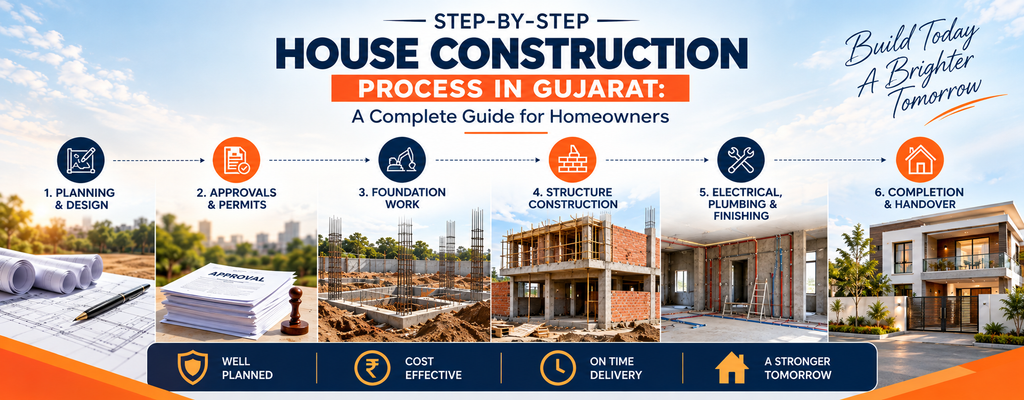
Major Stages of Home Construction
Building a home involves several stages, from preparing the site and laying the foundation to completing the final finishes. Each stage needs proper planning, quality materials, and skilled workmanship to ensure a safe, durable, and long-lasting home.
Site Preparation and Foundation
Construction begins with site clearing, soil assessment, marking, excavation, and foundation work. A properly designed foundation provides a stable base and transfers the building load safely to the ground.
Plinth and Ground-Level Construction
After the foundation, the plinth is constructed to raise the building above ground level and help protect it from moisture and surface water. Proper plinth construction also creates a strong transition between the foundation and the main structure.
RCC Structure and Reinforcement
RCC construction forms the main structural framework of many modern homes, including columns, beams, and slabs. Quality TMT bars are used as reinforcement to provide the required strength, ductility, and stability to the concrete structure.
Brickwork and Wall Construction
Once the structural framework is ready, brickwork or blockwork is carried out to create external and internal walls. Proper alignment, bonding, and workmanship are important for strong and durable walls.
Roofing and Slab Construction
Roof slabs are constructed using reinforcement steel, concrete, and appropriate formwork as per the structural design. Proper execution and curing help improve the strength and durability of the roof.
Electrical and Plumbing Work
Electrical conduits, wiring routes, water supply lines, drainage pipes, and other services are installed before the walls and surfaces are fully finished. Planning these systems early helps avoid unnecessary modifications later.
Plastering and Flooring
Plastering provides a smooth and protective surface to walls and ceilings, while flooring materials are installed according to the home’s design and usage. Proper surface preparation is important for a clean and durable finish.
Painting and Final Finishing
The final stage includes painting, doors, windows, fixtures, sanitary fittings, lighting, and other finishing work. A detailed inspection at this stage helps identify and correct minor issues before the home is handed over.
Choosing the Right Construction Materials for Your Home
When constructing a house in Gujarat, material selection becomes very important. While selecting materials, it is important to take into account structural needs, design needs, site needs, the standard and the recommendations by the experts.
How to Choose TMT Bars?
TMT Bars are commonly used in reinforced concrete structures as reinforcements. All of the above factors as mentioned in the structural design, Indian Standard requirements, size, certification, manufacturing quality, and traceability need to be considered while selecting TMT Bars for residential structures.
Choosing Cement and Concrete
Concrete and cement must meet the needs of the project. In order to select the appropriate concrete, one must think beyond the price factor and consider structural needs.
Bricks and Blocks
Depending on the wall requirements and building design, bricks, concrete blocks, and other masonry units may be taken into consideration. Before choosing, considerations such strength, size, weight, water absorption, and availability should be assessed.
Sand and Aggregates
Aggregates and sands are essential components in masonry and concrete works. These need to satisfy the requirements in grading and other properties, be free from contamination, and must be suited for their intended use.
Waterproofing Materials
Such locations may include the roof, bathroom, balcony, basement, foundations, and many other areas that become wet. This needs to be taken into account while choosing the waterproofing system.
Which TMT Bar Grade Is Suitable for Home Construction?
The common reinforcement materials are Fe 500, Fe 550, and Fe 550D but the choice will depend on the design of the structure.
- Fe 500: Frequently taken into account for residential reinforced concrete structures where this grade is specified in the structural design.
- Fe 550: When the structural design calls for stronger reinforcement, the Fe 550 TMT Bar may be taken into consideration because it offers a higher yield strength than Fe 500.
- Fe 550D: Combines specific ductility features with increased strength; the Fe 550D TMT Bar taken into consideration for structures that need these qualities.
Why TMT Bar Quality Matters in Home Construction?
The performance and longevity of a home’s concrete- reinforced structure are significantly influenced by TMT bar quality.
- Structural resistance: Reinforcement provided by TMT bars increases the resistance of concrete against structural stresses and tensile stresses.
- Ductility: Steel with ductility is able to bend or deform when stressed without sudden failure.
- Bonding with concrete: The surface of TMT bars with its ribs facilitates bond between the concrete and the steel.
- Durability: Durability of the structure can be ensured through proper reinforcement and concrete cover.
- Protection against corrosion: Reinforcement can be protected from corrosion due to moisture through proper steel selection and construction practices.
- Seismic considerations: In seismic loading, performance of structures can be ensured through proper reinforcement and detailing.
How to Plan Your Home Construction Budget?
A clear construction budget helps you manage expenses and avoid unexpected financial pressure during the project. Before starting construction in Gujarat, consider material, labour, structural design, finishing, and contingency costs. Comparing quotations and keeping some funds aside for unforeseen expenses can make the construction process more manageable.
Material Costs
Materials such as TMT bars, cement, bricks, sand, aggregates, plumbing items, and electrical components form a major part of the construction budget. Choose quality materials based on the structural requirements rather than focusing only on the lowest price.
Labour Costs
Labour expenses depend on the size of the house, construction method, location, and project duration. Get quotations from experienced contractors and clearly understand what is included in the labour charges before starting work.
Structural and Design Costs
Architectural drawings, structural design, soil testing, engineering consultation, and other professional services should be included in the initial budget. Proper planning can also help reduce material wastage and costly changes during construction.
Finishing Costs
Finishing expenses include flooring, painting, doors, windows, sanitary fittings, kitchen work, electrical fixtures, and other interior elements. Decide your preferred quality and finish level early to keep these costs under control.
Contingency Budget
Keep a contingency amount aside for unexpected expenses such as material price changes, design modifications, additional work, or site-related issues. Having a financial buffer helps prevent delays when unforeseen costs arise.
How to Choose Reliable Construction Material Suppliers in Gujarat?
Choosing reliable construction material suppliers is important for maintaining the quality, strength, and timeline of your home construction project. When comparing construction material suppliers in Gujarat, look at product quality, certifications, manufacturing standards, consistency, delivery support, and supplier reputation. For structural materials, working with established TMT bar suppliers in Gujarat and TMT steel manufacturers in Gujarat can help ensure you receive reliable reinforcement steel that meets the required specifications.
Check Material Quality and Standards
Always verify the grade, specifications, testing, and applicable quality standards of construction materials before purchasing. Consistent quality is especially important for structural materials such as TMT bars.
Compare TMT Bar Suppliers in Gujarat
When selecting TMT bar suppliers in Gujarat, compare product specifications, available grades, quality documentation, pricing, delivery capabilities, and after-sales support rather than choosing only on price.
Consider Manufacturer Reputation
Established TMT steel manufacturers in Gujarat with consistent production standards and reliable distribution networks can provide greater confidence in material quality and availability throughout the project.
Verify Supply and Delivery Support
Construction delays can occur when essential materials are not available on time. Choose suppliers who can provide the required quantity according to your construction schedule and deliver materials to the site when needed.
Prioritize Quality over Lowest Price
The cheapest material may not always offer the best value for a long-term construction project. Prioritizing quality construction materials in Gujarat can support structural durability, reduce material-related issues, and provide better value over the life of the building.
Why Choose Quality TMT Bars for Your Home?
TMT bars are an important reinforcement material in RCC construction, helping provide strength, flexibility, and structural stability to columns, beams, slabs, and foundations. Choosing the right grade and quality of TMT steel can support the long-term durability of your home. Bhrata TMX offers quality TMT bars designed for residential and structural applications, making them a reliable choice for home construction in Gujarat.
For different construction requirements, explore Bhrata TMX Fe 550 TMT Bars and Bhrata TMX Fe 550D TMT Bars to understand their specifications and applications.
Frequently Asked Questions
Q1. What are the basic processes in building a house in Gujarat?
The basic processes involved in the construction of a house in Gujarat include planning, clearance of the land, laying of foundation, construction of house, brick masonry, electricals, plumbing, plastering, flooring, waterproofing, and painting.
Q2. Which grade of TMT bar would be the most suitable for house construction?
There is no grade that fits all houses. Fe 500, Fe 550, or Fe 550D must be selected depending upon the structural engineer’s design.
Q3. Is Fe 550D fit for residential building construction?
Fe 550D, if it fits the required standards and selected as fit for use through structural designs, can be used in residential structures.
Q4. What is the required amount of TMT steel for constructing a building?
The following are some of the factors affecting the amount of TMT steel required: build up area, number of floors, kind of structure, kind of soil, span, etc.
Q5. What materials need to be used to construct a building?
The materials used include reinforcement steel, cement, concrete, bricks or blocks, sand, aggregates, water proofing materials, electrical and plumbing materials, and other finishing materials.
Q6. How do I cut down my home construction cost without compromising on quality?
It is possible to manage the cost of construction by proper planning and estimating the quantity of materials.
Conclusion
When it comes to making a house in Gujarat, proper planning is essential along with the use of quality materials as well as expert advice regarding structures. Everything from selecting the plot and assessing the nature of the soil to buying good quality TMT bars for home construction will contribute to the success of the house.